A new school year can feel like a fresh start for students and families. New teachers, classes, assignments, friendships, and opportunities can all bring excitement. But once the year gets underway, it can be easy for parents to assume that no news means everything is going well.
Parent engagement should not begin and end with report cards or parent-teacher conferences.
One of the most effective ways parents and caregivers can remain connected to their child’s education is simply by asking good questions throughout the year. Those conversations can help parents better understand academic progress, identify challenges before they become larger problems, and discover opportunities their children might otherwise miss.
At the Clark County Equity Coalition, we believe parents, educators, schools, and community organizations all play important roles in preparing children for successful futures. Strong family-school relationships can help make sure students are seen, supported, challenged, and connected with the resources they need.
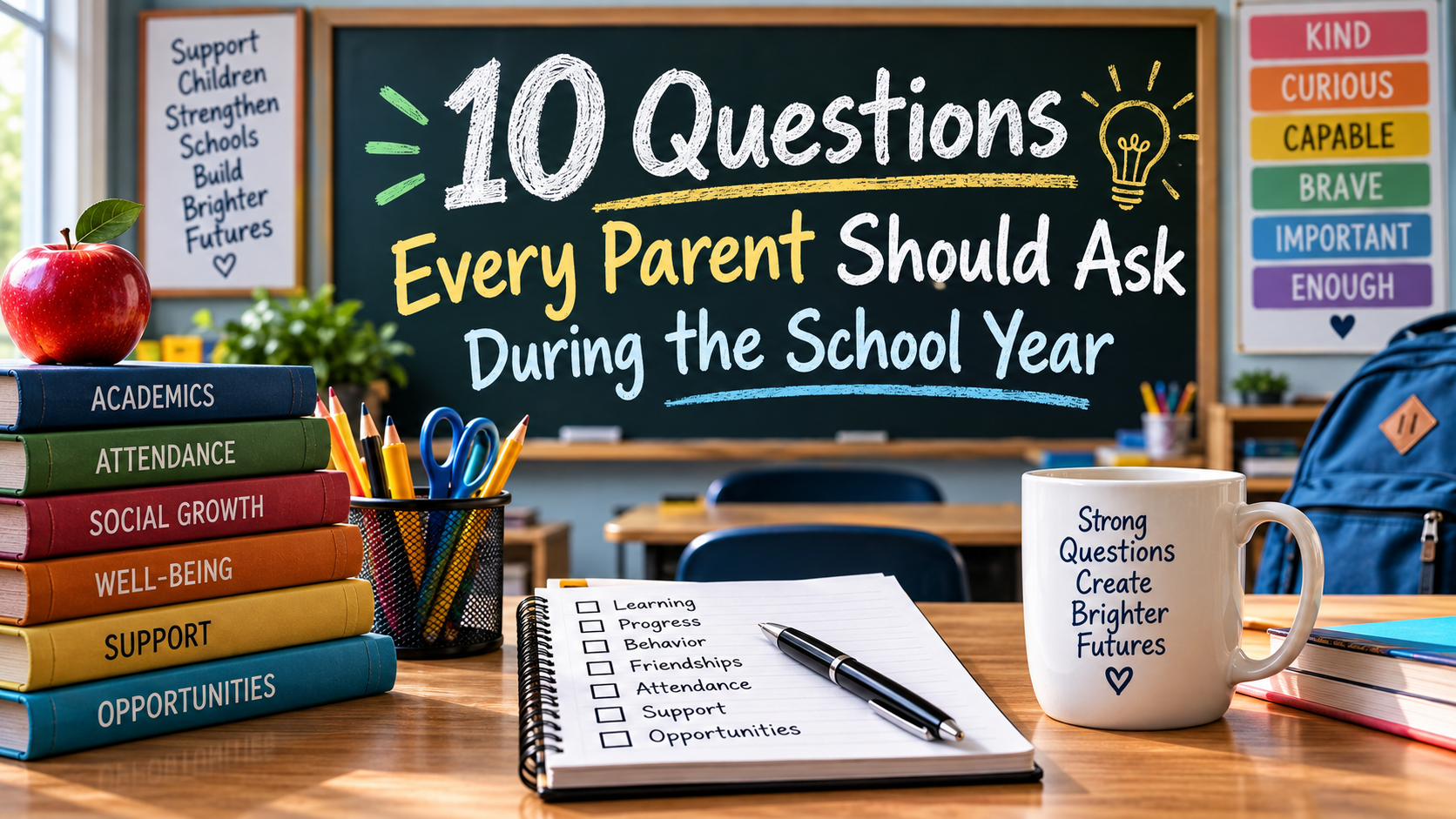
Here are 10 Questions Every Parent Should Ask During the School Year to better understand how your child is doing academically, socially, and emotionally.
1. What Are My Child’s Strengths?
It is natural for conversations about school to focus on areas that need improvement.
Parents may hear about a low math grade, missing assignments, difficulty concentrating, or a subject where additional practice is needed. Those conversations are important—but so are conversations about strengths.
Ask your child’s teacher:
“Where do you see my child doing especially well?”
Strengths may extend beyond grades.
A student might be an excellent communicator, creative thinker, problem solver, leader, listener, writer, or collaborator. A child who struggles in one subject may demonstrate remarkable ability somewhere else.
Recognizing these strengths helps parents reinforce confidence at home while giving students a clearer sense of what they are capable of accomplishing.
It can also help families discover extracurricular activities, career interests, leadership programs, or other opportunities that build upon those strengths.
2. Is My Child Making Appropriate Academic Progress?
A letter grade offers information, but it doesn’t always tell the entire story.
A student earning a B may be making tremendous progress after previously struggling. Another student may earn an A while not being sufficiently challenged.
Rather than asking only, “What grade does my child have?”, consider asking:
“Is my child making the progress you would expect at this point in the year?”
Follow-up questions might include:
- Where has my child improved?
- Where are they struggling?
- Is their performance changing?
- Are there skills they need to strengthen?
- Are they working at an appropriate level?
Parents can also ask teachers to provide examples of classroom work when appropriate. Seeing actual assignments can sometimes provide much more context than looking at a single number on a report card.
The goal isn’t simply to monitor grades. It is to understand how your child is developing as a learner.

3. Does My Child Participate and Engage in Class?
Some students perform well on assignments while rarely participating in classroom activities.
Others may be enthusiastic participants but struggle when completing independent work.
Ask:
“How engaged is my child during class?”
Teachers may notice whether a student:
- Asks questions
- Participates in discussions
- Works well independently
- Contributes to group activities
- Appears distracted
- Avoids challenging tasks
- Volunteers ideas
- Shows curiosity about new material
Classroom engagement can provide valuable insight into how comfortable and confident a student feels at school.
A noticeable change in participation can also sometimes signal that something else deserves attention.
4. How Is My Child Doing Socially?
Academic performance is important, but students spend a significant portion of their lives interacting with classmates, teachers, coaches, and other adults.
Ask:
“How does my child interact with other students?”
Parents might learn that their child:
- Works well in groups
- Naturally takes leadership roles
- Has difficulty resolving conflicts
- Prefers working independently
- Seems socially isolated
- Demonstrates kindness toward classmates
- Has developed a strong group of friends
- Struggles with communication
Parents shouldn’t expect teachers to know every detail of a child’s social life, but classroom observations can still provide useful information.
School is not only where students learn academic subjects. It is also where they practice communication, teamwork, conflict resolution, empathy, and other skills that matter throughout life.
5. Have You Noticed Any Changes in My Child?
This may be one of the most important of the 10 Questions Every Parent Should Ask During the School Year.
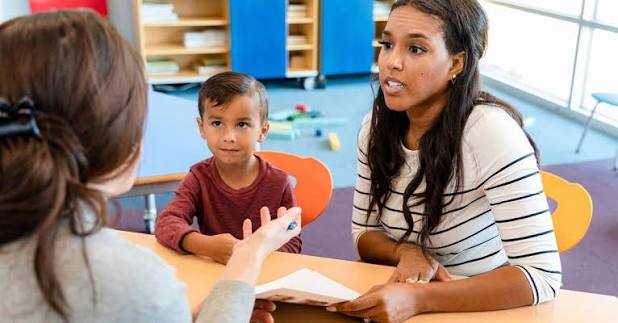
Teachers interact with students in an environment parents don’t normally see.
That gives educators a valuable perspective.
Ask:
“Have you noticed any changes in my child’s behavior, participation, mood, attendance, or academic performance?”
Changes might include:
- Becoming unusually quiet
- Increased irritability
- Difficulty concentrating
- Falling asleep in class
- Missing assignments
- Declining grades
- Frequent absences
- Social withdrawal
- Suddenly avoiding certain activities
- Increased anxiety surrounding schoolwork
A change doesn’t necessarily mean there is a serious problem.
Children experience difficult days and temporary changes just like adults do. However, patterns can sometimes indicate that a student is experiencing academic, emotional, social, or personal challenges.
Recognizing changes early gives families and schools a better opportunity to respond proactively.

6. Is My Child Asking for Help When They Need It?
Students don’t always tell adults when they are struggling.
Some may be embarrassed.
Others fear getting in trouble or appearing unsuccessful. Some high-achieving students have spent years relying on their natural abilities and may not know how to ask for assistance when school becomes more challenging.
Ask:
“Does my child ask for help when they don’t understand something?”
If the answer is no, parents and educators can work together to normalize help-seeking.
Children should understand that asking questions isn’t a sign of failure.
It is part of learning.
Parents can reinforce this at home by praising persistence, curiosity, and problem-solving—not only correct answers.
7. Are There Resources or Supports My Child Should Be Using?
Schools and communities may offer more resources than families realize.
Depending on a student’s needs, available support could include:
- Tutoring
- Academic intervention
- School counseling
- Family resource programs
- Mentoring
- Clubs
- Leadership programs
- College and career preparation
- Enrichment opportunities
- Mental health resources
- Community programs
Ask:
“Are there programs, resources, or opportunities you think would benefit my child?”
This question can be valuable even when a student isn’t struggling.
Resources aren’t only for students experiencing difficulties.
A student who excels academically may benefit from enrichment. A student interested in a particular career may benefit from mentorship or career exposure. A student who enjoys public speaking might benefit from leadership development.
The Clark County Equity Coalition offers programs designed to expand access, support student well-being, strengthen student voices, and create meaningful educational and career opportunities.
8. How Is My Child’s Attendance Affecting Their Progress?
Attendance is about much more than counting absences.
Missing instructional time can make it difficult for students to remain connected to classroom learning, particularly when absences become frequent.
Ask:
“Is my child’s attendance or tardiness affecting their progress?”
If attendance has become an issue, the next question shouldn’t always be, “Why aren’t they showing up?”
Sometimes a better question is:
“Is there a barrier making attendance difficult?”
Students can miss school for many reasons, including:
- Illness
- Transportation challenges
- Family responsibilities
- Mental health concerns
- Bullying
- Housing instability
- Academic anxiety
- Other circumstances beyond their control
Understanding the underlying challenge gives families and schools a better opportunity to find meaningful solutions.

9. What Can We Do at Home to Support What Is Happening at School?
Families don’t have to recreate the classroom at the kitchen table.
Supporting learning at home can be much simpler.
Ask the teacher:
“What can we reinforce at home?”
The answer may involve:
- Reading regularly
- Practicing multiplication facts
- Developing better organization
- Establishing a homework routine
- Discussing current events
- Encouraging independent problem-solving
- Improving sleep routines
- Practicing vocabulary
- Checking assignment calendars
Parents should also ask what not to do.
Helping too much can sometimes prevent students from developing independence.
The best home-school partnership allows educators and families to reinforce one another rather than working in separate directions.
The CDC describes parent engagement as parents and school staff working together to support children’s learning, development, and health. Families can learn more about parent engagement through the CDC’s resources.
10. What Should We Focus on Between Now and Our Next Conversation?
Every productive school conversation should end with a next step.
Ask:
“What should my child and I focus on before we check in again?”
Maybe the goal is:
- Completing assignments consistently
- Improving reading comprehension
- Participating more frequently
- Reducing tardiness
- Asking for help
- Improving organization
- Strengthening study habits
- Exploring extracurricular opportunities
Make the goal specific and realistic.
Parents can also ask:
“When should we check in again?”
You don’t have to wait for another formal parent-teacher conference.
A quick email or scheduled conversation several weeks later can help determine whether progress is being made or additional support is necessary.
Resources such as Understood’s parent-teacher conference guidance can also help parents prepare questions and make productive use of conversations with educators.
You Don’t Have to Wait for a Problem to Get Involved
One of the most important lessons for families is that communication with a school doesn’t need to happen only when something goes wrong.
Parents can communicate when their child is doing well.
They can ask about upcoming opportunities.
They can celebrate progress.
They can ask questions before they feel completely lost.
They can learn about resources before those resources become urgently necessary.
This proactive approach closely reflects the philosophy of the Clark County Equity Coalition.
The Coalition was formed by parents and grandparents who wanted to work with schools and the broader community as a resource for children and families. Its mission centers on equal and meaningful preparation for children, bridging opportunity gaps, strengthening community engagement, and taking proactive steps rather than waiting until challenges become crises.
Parents Are Partners in Education
Parents don’t need to understand every educational acronym, policy, assessment, or classroom strategy to play a meaningful role in their child’s education.
They need opportunities to communicate, ask questions, access information, and understand where they can help.
According to the CDC, students with engaged parents are more likely to demonstrate higher academic achievement, better behavior, and stronger social skills.
The U.S. Department of Education has also emphasized the importance of strong partnerships between families and schools in supporting student success.
Parent engagement isn’t about hovering over every assignment.
It is about creating a partnership.
Teachers understand what happens in the classroom.
Parents understand their children in ways no one else can.
Students have their own experiences, strengths, fears, goals, and perspectives.
When those perspectives come together, adults can make better-informed decisions about how to support a child’s growth.
Don’t Be Afraid to Ask Questions
Some parents hesitate to contact schools because they aren’t sure what to ask, don’t understand educational terminology, or worry that their questions will be seen as confrontational.
Questions don’t have to be confrontational.
They can be collaborative.
Instead of asking:
“Why is my child getting such a bad grade?”
Try:
“Can you help me understand where my child is struggling and what we can do together?”
Instead of:
“Why isn’t the school helping?”
Try:
“What resources are available, and who should I speak with about accessing them?”
Good questions create conversations.
Good conversations create understanding.
And understanding gives families, educators, and students a better opportunity to work toward meaningful solutions.

Clark County Equity Coalition: Connecting Families, Students, and Schools
The 10 Questions Every Parent Should Ask During the School Year are not meant to be asked once and forgotten.
Think of them as conversation starters that parents can return to throughout the year.
As children grow, their academic, social, and emotional needs change. Staying engaged allows families to recognize those changes while helping students discover opportunities they might otherwise overlook.
The Clark County Equity Coalition works to support students and families by removing barriers, expanding opportunities, promoting well-being, and strengthening connections throughout Clark County and surrounding communities.
Final Thoughts
Parents don’t need to have all the answers.
Sometimes knowing which questions to ask is just as important.
Ask about strengths.
Ask about progress.
Ask about friendships.
Ask about attendance.
Ask about emotional well-being.
Ask about opportunities.
Ask about resources.
Most importantly, keep asking.
Strong relationships between families and educators create opportunities to identify challenges earlier, celebrate progress, connect students with resources, and make sure children don’t quietly fall through gaps in the educational system.
At the Clark County Equity Coalition, we believe preparing students for successful futures is shared work. Families, educators, schools, community organizations, and students themselves each bring something important to that partnership.
By staying curious, communicating consistently, and asking meaningful questions throughout the school year, parents can become powerful partners in helping every child feel supported, valued, and prepared to succeed.