Every classroom contains students with different strengths, personalities, experiences, and needs. Some students openly ask for help when they are struggling. Others do everything possible to make sure no one notices.
A student may complete assignments while quietly dealing with anxiety. Another may become disruptive because they are overwhelmed by circumstances outside of school. A normally engaged student may suddenly stop participating. A high-achieving student may maintain excellent grades while experiencing tremendous emotional pressure.
For educators, recognizing hidden student challenges can be difficult because struggles do not always look the way we expect them to.
At the Clark County Equity Coalition, we believe proactive support can help prevent students from falling through gaps in the educational system. Teachers and school staff interact with students for hours every school day, placing them in a unique position to notice meaningful changes and help connect children with appropriate support.
Recognizing a concern does not mean diagnosing a student. Educators are not expected to become mental health professionals, social workers, or investigators. Instead, the goal is to notice patterns, create supportive environments, communicate concerns appropriately, and know when additional resources may be necessary.
Hidden Student Challenges Don’t Always Look Like Struggling
It is easy to recognize certain academic difficulties. A student repeatedly failing assignments or missing school immediately attracts attention.
Other challenges can be much less obvious.
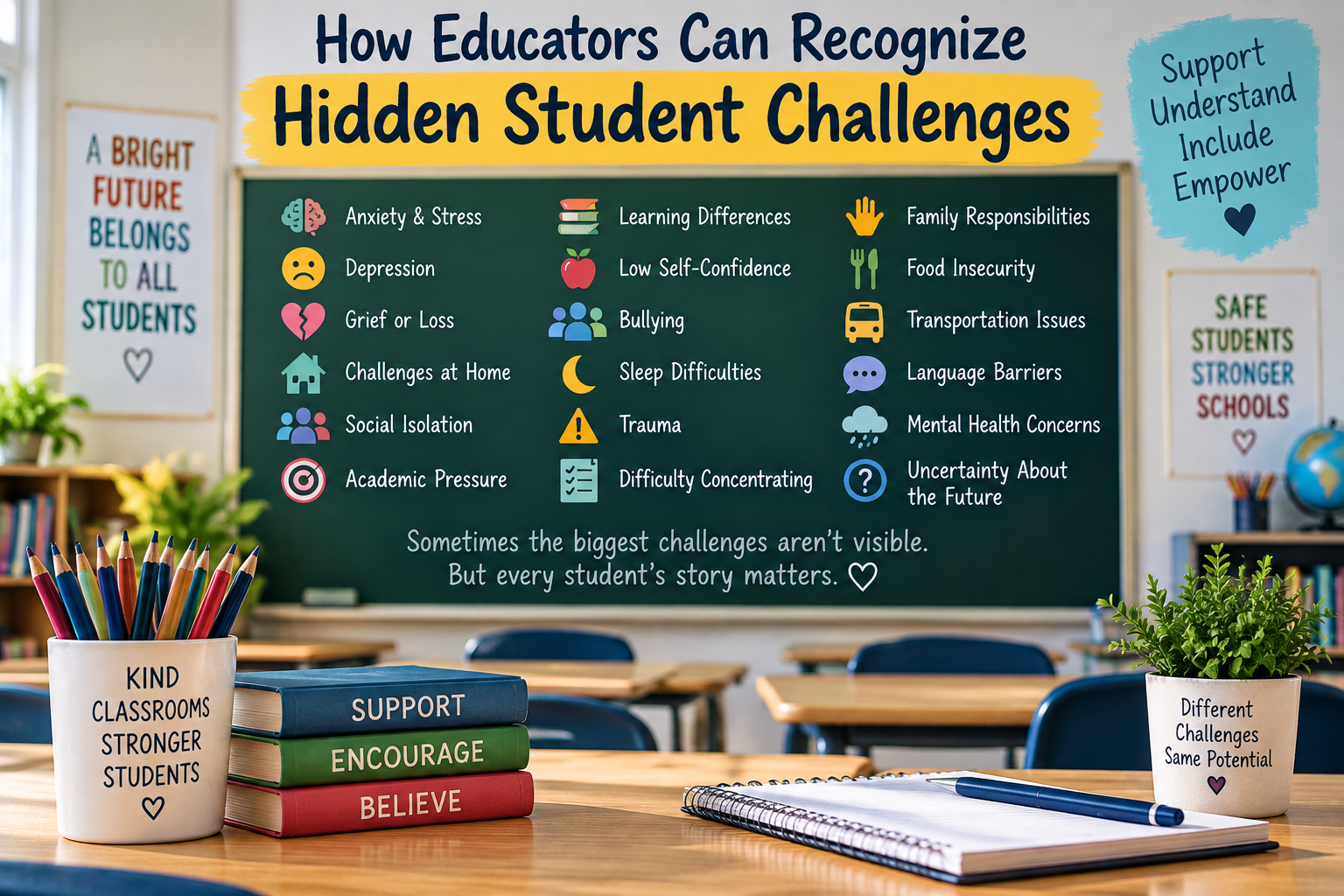
Students may struggle with:
- Anxiety or chronic stress
- Depression or other mental health concerns
- Difficulties at home
- Grief or loss
- Bullying
- Food or housing insecurity
- Learning differences
- Social isolation
- Family responsibilities
- Language barriers
- Trauma
- Academic pressure
- Fear of failure
- Lack of confidence
- Uncertainty about their future
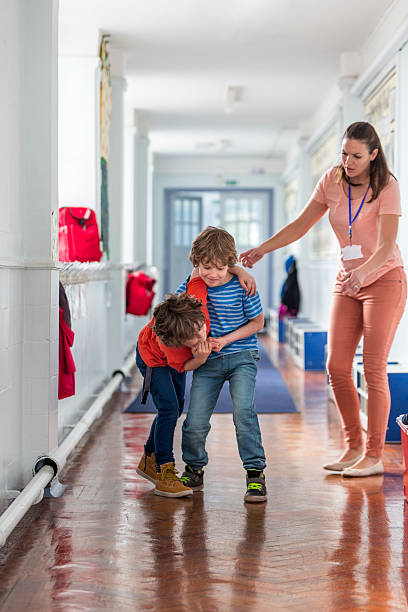
Some students become quiet when overwhelmed. Others become frustrated, angry, distracted, or disruptive.
Still others become perfectionists.
Understanding that struggles can manifest differently is one of the first steps toward recognizing students who may need additional support.
Look for Changes, Not Just Behaviors
One of the most useful things educators can observe is change.
Teachers get to know students’ personalities and habits over time. That familiarity can make educators particularly valuable in recognizing when something seems different.
A student who has always been quiet may simply be naturally reserved. But if an outgoing student suddenly stops talking to classmates, the change may deserve attention.
Likewise, one incomplete assignment isn’t necessarily concerning. A pattern of missing assignments from a student who previously completed everything may tell a different story.
Potential changes include:
- Declining grades
- Increased absences or tardiness
- Suddenly incomplete assignments
- Withdrawal from classmates
- Loss of interest in activities
- Difficulty concentrating
- Uncharacteristic irritability
- Changes in classroom participation
- Frequent visits to the nurse
- Increased conflicts with classmates
- Falling asleep during class
- Changes in appearance or hygiene
- Increased perfectionism or fear of making mistakes
No single behavior automatically means something is wrong. Context and patterns matter.
Behavior May Be Communication
When a student repeatedly disrupts class, refuses to complete work, or responds angrily to instructions, the natural question is often:
“How do we stop this behavior?”
Sometimes another question can be equally important:
“What might this behavior be communicating?”
Behavior and mental health concerns are not interchangeable, and appropriate expectations and accountability still matter. However, understanding the reason behind a behavior can help educators respond more effectively.
A student who refuses an assignment may not understand the material.
A student who constantly jokes during lessons may be trying to hide insecurity.
A student who becomes angry when corrected may be experiencing stress elsewhere.
A student who puts their head down every afternoon may not be disengaged—they may be exhausted.
Looking beyond the immediate behavior doesn’t mean excusing inappropriate actions. It means gathering enough information to choose the response most likely to help the student improve.
Academic Performance Can Be an Important Clue
Grades tell only part of a student’s story, but significant changes in academic performance can provide useful information.
Educators should pay particular attention when a student who previously performed consistently begins:
- Missing assignments
- Forgetting materials
- Struggling to concentrate
- Performing significantly worse on assessments
- Avoiding participation
- Losing motivation
- Appearing overwhelmed by ordinary tasks
Rather than immediately assuming laziness or lack of effort, educators can approach these changes with curiosity.
A simple conversation may reveal an academic difficulty, personal challenge, or need for additional support.
High-Achieving Students Can Struggle Too
Hidden student challenges are especially easy to overlook when a student continues earning good grades.
Academic success does not automatically mean emotional well-being.
Some high-achieving students experience intense pressure to maintain their performance. They may fear disappointing parents, teachers, coaches, or themselves.
Warning signs can include:
- Extreme distress over small mistakes
- Excessive perfectionism
- Reluctance to ask for help
- Constant comparison with classmates
- Lack of sleep because of schoolwork
- Fear surrounding grades or tests
- Difficulty accepting anything below their expectations
Because these students appear successful academically, adults may unintentionally overlook their struggles.
Educators should remember that support should not be determined solely by a student’s report card.
Attendance Can Tell a Story
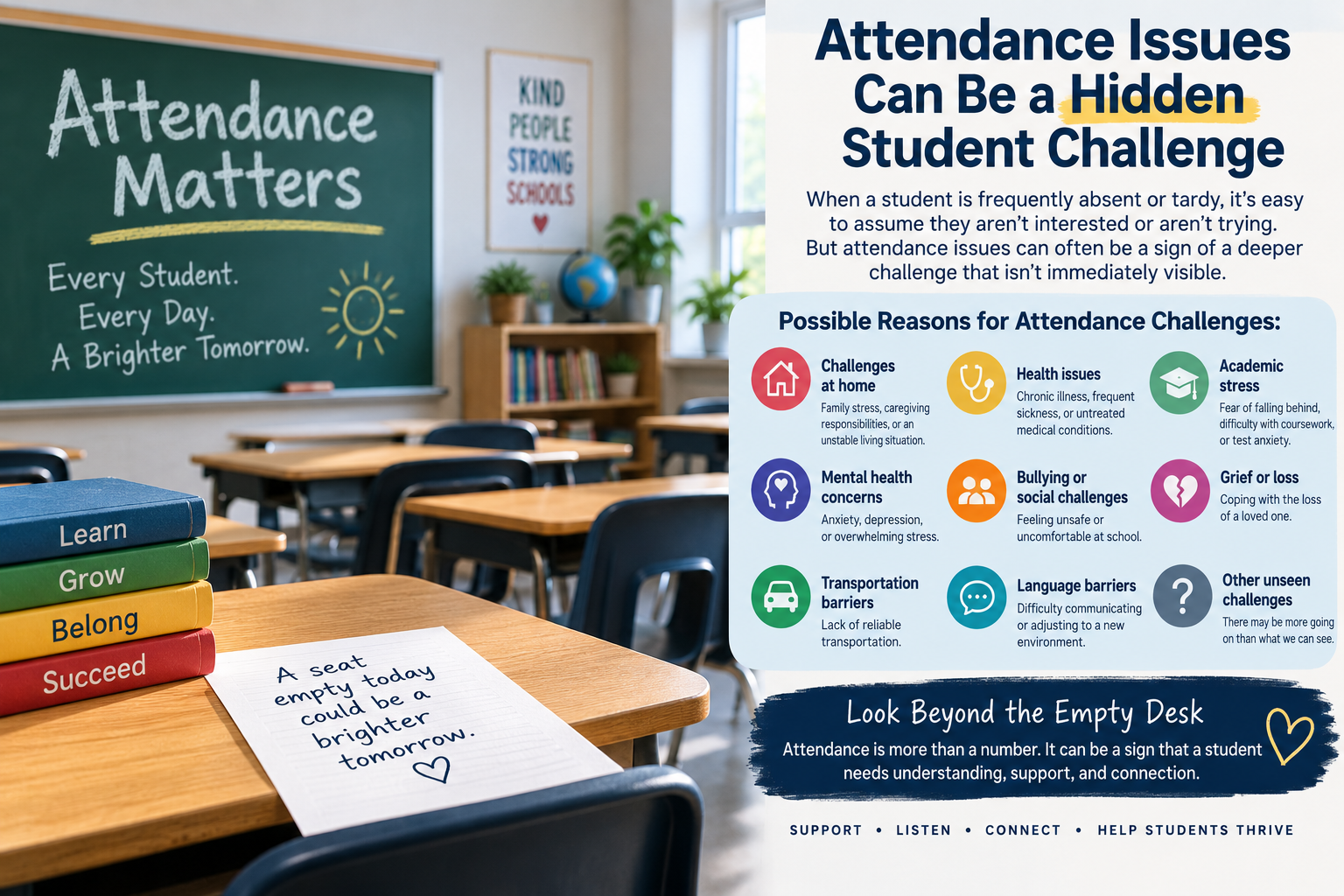
Changes in attendance can provide another clue.
Frequent absences, repeated tardiness, or regularly leaving school early can result from many different circumstances.
Students may experience transportation problems, family responsibilities, health concerns, anxiety, bullying, unstable housing, or other challenges that interfere with attendance.
Instead of viewing attendance exclusively as a compliance issue, schools can also ask whether barriers are preventing a student from consistently reaching the classroom.
That distinction can be critical.
Solving the underlying barrier may accomplish far more than simply addressing the absence.
Build Relationships Before Problems Appear
Students are more likely to communicate when they trust the adults around them.
That trust usually develops long before a difficult conversation takes place.
Small interactions matter.
Greeting students by name, recognizing their accomplishments, asking about their interests, listening when they speak, and consistently treating them with respect can create a classroom where students feel valued.
A student who knows an educator genuinely cares may be more comfortable saying:
“I’m having a hard time.”
Those five words can open the door to meaningful support.
Create Safe and Accountable Learning Environments
Students need classrooms where they feel safe enough to learn, ask questions, make mistakes, and request help.
A supportive learning environment doesn’t mean eliminating expectations.
Students benefit from both support and accountability.
Educators can create these environments by:

- Establishing clear and consistent expectations
- Responding calmly to mistakes
- Encouraging questions
- Avoiding unnecessary public embarrassment
- Teaching healthy problem-solving skills
- Modeling respectful communication
- Creating predictable routines
- Encouraging students to seek assistance
- Recognizing improvement
- Maintaining appropriate boundaries
Predictability can be particularly valuable for students experiencing instability elsewhere in their lives.
Know When to Bring in Additional Support
Teachers should never feel responsible for solving every problem themselves.
One of the most important professional skills educators can develop is recognizing when another qualified professional needs to become involved.
Depending on the situation and school procedures, educators may communicate concerns to:
- School counselors
- School psychologists
- Social workers
- Nurses
- Administrators
- Student support teams
- Parents or caregivers
- Qualified mental health professionals
Teachers can provide valuable observations because they see students regularly and can describe changes in behavior, attendance, participation, and academic performance.
The educator’s role isn’t necessarily to determine why something is happening. Their observations can help the appropriate professionals determine what happens next.
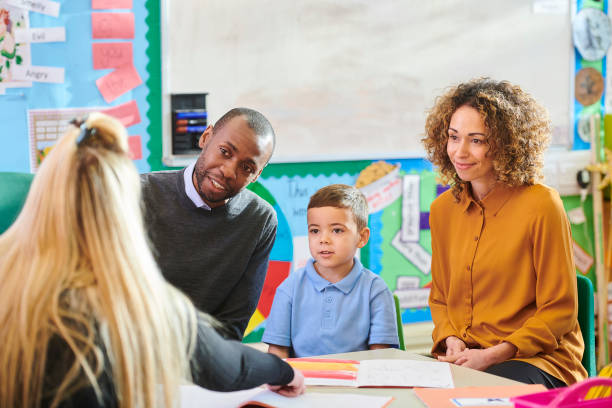
Communicate With Families as Partners
Families often have information educators don’t have, while teachers may observe things parents cannot see at home.
Communication between the two can create a more complete picture.
Instead of beginning with:
“Your child is becoming a problem in class.”
A collaborative conversation might begin:
“I’ve noticed some changes recently, and I wanted to check in with you.”
The difference matters.
Effective family communication should focus on specific observations rather than assumptions.
For example:
“I’ve noticed Jordan has missed four assignments this month and has been much quieter than usual.”
That gives families useful information without prematurely assigning a cause.
Parents and educators can then work together to determine whether additional support is needed.
Professional Development Gives Educators More Tools
Teachers enter education to teach, but modern classrooms require educators to navigate increasingly complex student needs.
Professional development can help teachers strengthen their ability to:
- Recognize warning signs
- Understand trauma-informed practices
- Distinguish potential mental health concerns from behavioral problems
- Respond appropriately to students experiencing distress
- Communicate effectively with families
- Understand referral procedures
- Create supportive classrooms
- Protect their own well-being
Teachers deserve support too.
Expecting educators to address increasingly complex challenges without training, resources, or professional assistance is not sustainable.
Supporting teachers ultimately supports students.
Clark County Equity Coalition’s Proactive Mental Health Support
The Clark County Equity Coalition believes waiting until a student reaches a crisis point should never be the preferred strategy.
Our approach emphasizes preparation rather than reaction.
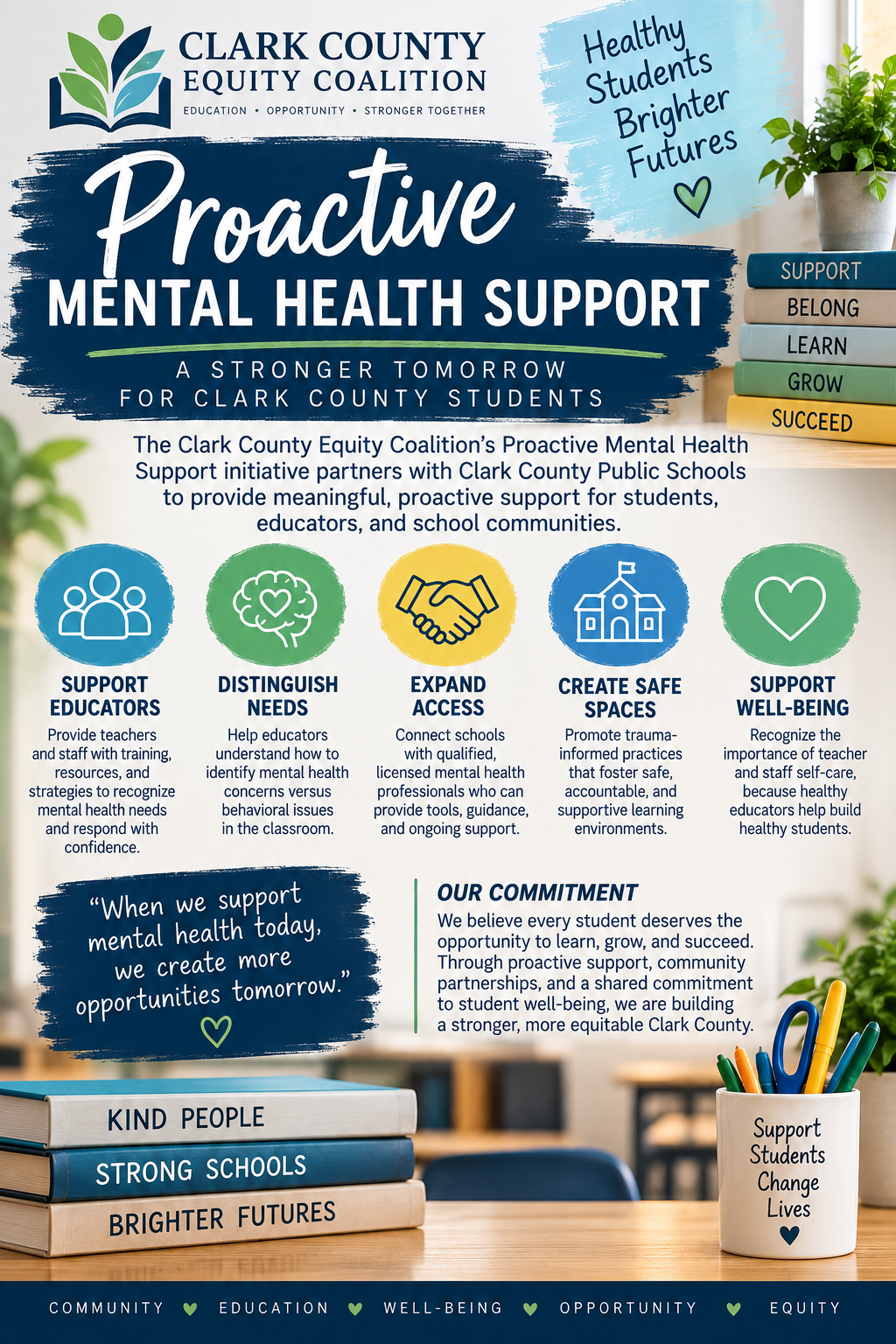
Through our Proactive Mental Health Support initiative, Clark County Equity Coalition partners with Clark County Public Schools to provide external, qualified resources that help teachers and staff support children experiencing mental health needs.
This initiative focuses on helping educators better understand how to identify potential mental health needs versus behavioral issues while providing strategies for creating safe, accountable spaces for students.
The initiative also works to expand access to qualified, licensed practitioners who can provide tools and training surrounding trauma-informed care while recognizing another essential component of healthy schools: teacher and staff self-care.
Supporting Educators Means Supporting Students
Recognizing hidden student challenges isn’t about asking teachers to diagnose students or solve problems outside their professional role.
It is about giving educators the knowledge, resources, partnerships, and confidence to recognize when something has changed.
Sometimes an educator may be the first adult to notice.
That observation can lead to a conversation.
The conversation can lead to support.
And appropriate support at the right time can change the trajectory of a student’s education.
Every Student Deserves the Opportunity to Be Seen
Some students clearly communicate when they need help.
Others struggle quietly.
The student who becomes disruptive deserves to have someone look beyond the disruption. The student whose grades suddenly fall deserves curiosity before judgment. The high achiever deserves support even when the report card looks perfect. The quiet student deserves to be noticed even when they never cause a problem.
Recognizing hidden student challenges begins with relationships, awareness, professional development, and collaboration.
At the Clark County Equity Coalition, our work is rooted in proactive measures. We believe families, educators, schools, and community organizations can work together to identify gaps and create meaningful opportunities for children before those gaps become barriers.
Through student programming, educator support, mental health initiatives, family engagement, community partnerships, and educational resources, we are working toward a future where students don’t have to fall through the cracks before someone notices they need help.
When educators have the resources to recognize challenges early and students know there are adults ready to listen, schools can become more than places where children receive an education. They can become communities where every student has a genuine opportunity to be seen, supported, challenged, and prepared for what comes next.